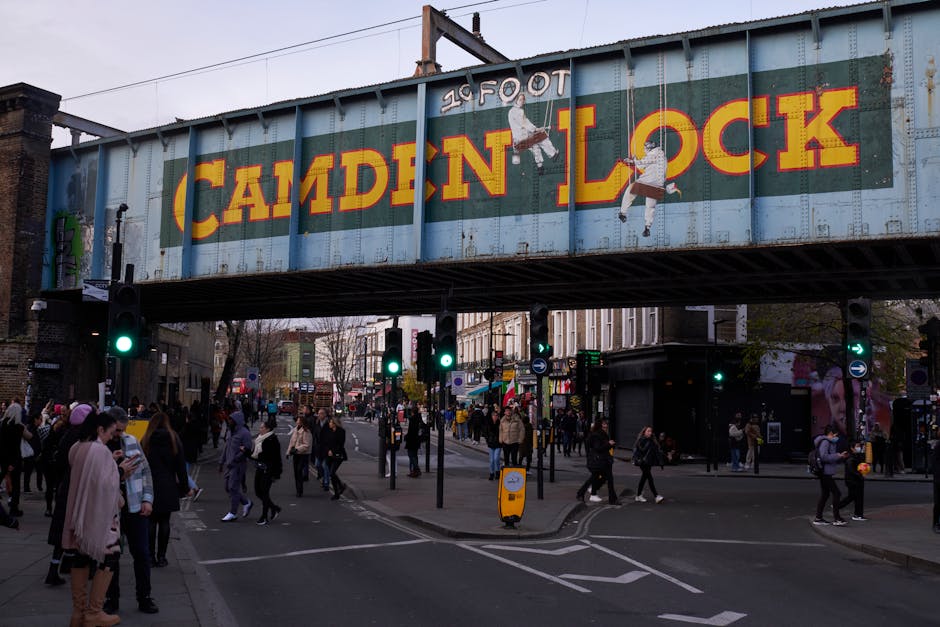
Camden Town rubbish removal guide for narrow streets
Getting rid of rubbish in Camden Town is rarely as simple as dragging a bag to the kerb. Between tight terraces, busy side roads, parked cars, delivery vans, and the usual London shuffle, narrow streets change the whole game. If you are dealing with a flat clear-out, a shop refit, or just a stubborn pile of household waste that keeps getting in the way, this Camden Town rubbish removal guide for narrow streets will help you plan it properly and avoid the usual headaches.
The goal here is not just to "get rid of stuff". It is to do it without blocking access, upsetting neighbours, missing collection windows, or turning a small job into a messy one. Truth be told, the difference between a smooth clearance and a stressful one is often a bit of planning and the right method. Let's walk through what works in real life, especially when every metre of pavement seems to matter.
Table of Contents
- Why Camden Town rubbish removal guide for narrow streets Matters
- How Camden Town rubbish removal guide for narrow streets Works
- Key Benefits and Practical Advantages
- Who This Is For and When It Makes Sense
- Step-by-Step Guidance
- Expert Tips for Better Results
- Common Mistakes to Avoid
- Tools, Resources and Recommendations
- Law, Compliance, Standards, or Best Practice
- Options, Methods, or Comparison Table
- Case Study or Real-World Example
- Practical Checklist
- Conclusion
- Frequently Asked Questions
Why Camden Town rubbish removal guide for narrow streets Matters
Camden Town has its own rhythm. Streets are busy, access can be awkward, and there is often very little space to stage waste safely. Narrow streets magnify every small problem: a skipped parking plan, a bin bag left too long, a bulky item that needs two people to turn at a corner, or a clearance team arriving with a vehicle that simply cannot get close enough. That is where a clear rubbish removal approach becomes valuable.
It matters because in tight streets, waste removal is not only about lifting and loading. It is about access, timing, courtesy, and avoiding disruption. If a crew has to park far away, carry items through a narrow passage, or wait because the road is blocked, the job becomes slower and more expensive. If you are doing it yourself, the same issues can turn a quick tidy-up into several tiring trips with heavy bags.
There is also the practical reality of mixed use in Camden. Homes, offices, shops, cafes, and short-let properties all generate different kinds of waste, often at different times. A shop refurb on a Monday morning feels very different from a flat clearance on a Friday afternoon. The street layout, traffic flow, and neighbour access all affect what is sensible.
Expert summary: In narrow streets, the best rubbish removal plan is usually the one that reduces carrying distance, avoids peak disruption, and separates bulky waste from everyday bags before anyone starts moving things.
One more thing. Narrow streets often punish poor sorting. If you mix recyclable items, general waste, and heavy objects in the same pile, you make the load harder to move and harder to dispose of properly. A little organisation up front can save a surprising amount of time later.
How Camden Town rubbish removal guide for narrow streets Works
In practice, rubbish removal in a tight Camden street tends to follow a simple pattern: assess access, decide on the removal method, prepare the waste, move it safely, and make sure the area is left tidy. The details matter, though, because "narrow streets" changes almost every step.
There are usually three broad approaches. You can do it yourself, use council or scheduled collection routes where suitable, or hire a professional clearance team that handles loading and transport for you. Each option has a different level of effort, flexibility, and convenience. The right choice depends on the volume of waste, the type of items involved, and whether the street allows a vehicle to stop nearby for long enough.
What tends to trip people up is assuming the job is only about volume. It is not. A few large items on a very tight road can be harder to remove than a bigger load from a wider, quieter street. A single sofa or fridge can be the awkward piece that slows everything down. Ever tried pivoting a wardrobe around a corner with a parked car inches away? Exactly.
Good rubbish removal in Camden Town usually starts with a realistic look at the route from the property to the vehicle. That means checking for steps, door widths, shared entrances, narrow hallways, and the point where bags or bulky items can be set down without blocking anyone. If the route is awkward, you may need more hands, more time, or a different collection method entirely.
Professional teams often work by loading items in one organised run rather than many small ones. That helps in narrow streets because it limits time spent occupying road space. It also reduces the chance of items being left out while someone searches for straps, gloves, or a trolley. Small thing, but it makes a difference.
Key Benefits and Practical Advantages
A thoughtful rubbish removal plan in Camden Town offers more than a clean space. It reduces stress, improves safety, and helps you keep neighbours, tenants, staff, or customers happy. In narrow streets especially, that is no small thing.
- Less disruption: Faster loading and better timing reduce the chance of blocking access for pedestrians, deliveries, and residents.
- Safer handling: Planning the route and sorting waste beforehand lowers the risk of lifting injuries and dropped items.
- Better compliance: Proper waste handling helps you stay on the right side of local rules and disposal expectations.
- Fewer delays: When access is tight, preparation stops small problems from snowballing.
- Cleaner presentation: This matters for landlords, shops, hospitality venues, and anyone trying to keep an area looking cared for.
There is also a hidden benefit: peace of mind. If you have ever watched a pile of waste slowly spread across a pavement while everyone in the building starts asking who is dealing with it, you will know the feeling. A proper plan ends that conversation quickly.
For commercial premises, efficient waste removal can also support day-to-day operations. A back alley cleared on time, or a shopfront kept tidy after a fit-out, can keep things moving for staff and customers. For household clear-outs, the benefit is simpler: you get your floor space back and stop tripping over the same old clutter.
Who This Is For and When It Makes Sense
This guide is useful for a wide range of people, not just large clearances. If you live or work in Camden Town and access is tight, this will probably feel familiar.
- Flat owners and tenants: Useful for furniture removal, loft clear-outs, end-of-tenancy waste, and bulky item disposal.
- Landlords and letting agents: Helpful after tenant moves, small refurbishments, or when properties need a fast reset.
- Shop owners and independent businesses: Especially relevant after deliveries, packaging build-up, display changes, or minor refurbishment work.
- Office managers: Good for old desks, chairs, shelving, archive waste, and general clutter that has accumulated over time.
- Trades and fit-out teams: Important where waste needs to be removed without tying up a narrow road or causing access complaints.
It makes sense whenever the job involves more than a couple of bin bags, or when the waste cannot be left out casually. If access is awkward, if the items are heavy, or if you need a tidy turnaround, a structured approach is usually the better bet.
For very small amounts, a simple manual carry-out may be enough. But if the street is already crowded, or if you are dealing with awkward items like broken furniture, old appliances, or renovation debris, the time savings from a proper collection approach can be worth it. And yes, sometimes the smartest option is the one that saves you from doing three trips in the rain.
Step-by-Step Guidance
Here is a practical way to handle rubbish removal in narrow Camden streets without making a meal of it.
- Identify the waste type. Separate general rubbish, recyclable materials, furniture, appliances, and any construction debris. Different items may need different handling.
- Estimate the volume. Count bags, list bulky pieces, and think in terms of how much space the load will take on the pavement and in the vehicle.
- Check access carefully. Measure doorways, stairwells, hallways, and any tight turns. A tape measure can save a lot of guesswork.
- Choose a removal method. Decide whether the job is a DIY carry-out, a scheduled collection, or a full service clearance.
- Set a sensible time window. In Camden, avoiding peak pedestrian and delivery times can make a noticeable difference.
- Prepare the waste. Bag loose items, flatten cardboard, remove sharp edges where safe, and keep heavy items separate.
- Clear the route. Make sure the path from the property to the collection point is free of trip hazards, bikes, prams, and random clutter.
- Load methodically. Start with the heaviest or most awkward items and keep smaller waste contained so it does not scatter.
- Sweep and check the area. A quick clean-up at the end helps avoid complaints and leaves the space presentable.
A small tip that people often miss: if the street is especially tight, stage items inside the property rather than on the pavement for as long as possible. That way, the road stays clear until the moment loading begins. It sounds obvious once said, but it is one of those things people forget when they are rushing.
If you are using a service provider, send photos in advance if possible. Good photos save back-and-forth and help the team judge access, parking, and lifting needs before arriving. That means fewer surprises on the day, which everyone appreciates.
Expert Tips for Better Results
Over time, the smoother jobs in Camden Town tend to share a few habits. Nothing glamorous. Just practical, steady choices that prevent drama.
Plan around street rhythm, not just your own schedule
It is tempting to choose the first convenient slot. But if the road is busiest with school traffic, deliveries, or evening parking pressure, you may spend more time waiting than moving waste. Early mornings often feel easier, but not always. The best window depends on the street itself, and sometimes on the weather too. A wet narrow pavement with slick bags and hurry in the air? Not ideal.
Use the right equipment for the route
For narrow accesses, sacks, hand trucks, lifting straps, and protective gloves can help a lot. Where the route is very tight, smaller loads are easier to control than oversized piles. A trolley is brilliant on a smooth surface, less brilliant on uneven steps. Fit the tools to the space, not the other way round.
Keep bulky items separate from loose waste
A single sofa frame, mattress, or broken wardrobe can hold up an entire clearance if it is buried under bagged rubbish. Group bulky items on their own so they can be lifted first. That one change often makes the whole job feel less chaotic.
Don't ignore neighbours
In narrow streets, what you do affects everyone nearby. A quick heads-up can prevent frustration if the pavement will be partially occupied for a short time. A polite word goes a long way. People tend to be more patient when they know what is happening.
Be realistic about lift weight
Overfilling bags is a classic mistake. It is awkward in narrow hallways, hard on the back, and can split mid-carry. Better to use more bags than one overstuffed one. Nobody ever regrets that choice halfway up the stairs.
Common Mistakes to Avoid
Narrow streets magnify errors, so the mistakes here are often small but annoying. Avoid these if you can.
- Underestimating access problems: A job that looks simple from the front door can become difficult once you reach the kerb.
- Leaving everything for one pile-up: The bigger and messier the pile, the harder it is to move efficiently.
- Blocking the pavement too long: In busy parts of Camden, this creates avoidable conflict and delays.
- Mixing sharp or heavy items with loose waste: That raises the risk of injury and damage.
- Choosing the wrong vehicle size: Too large and you may not access the street well; too small and you risk multiple trips.
- Forgetting the return route: It is not only about taking waste out. You need a clear path back in, too.
Another common one is assuming that because waste is "just outside", it is fine. On a narrow Camden street, just outside can still be in everyone's way. Better to keep it controlled and timed properly.
And yes, sometimes the issue is simply optimism. We have all looked at a pile and thought, "that won't take long." Then the first bag splits, the second item is heavier than expected, and the street is suddenly full of apologies. Happens.
Tools, Resources and Recommendations
You do not need a truckload of specialist kit, but the right basic tools make a big difference in narrow streets.
| Tool or resource | Why it helps | Best use case |
|---|---|---|
| Heavy-duty sacks | Contain loose waste and reduce spillage | Household clear-outs, mixed rubbish, light renovation debris |
| Gloves with grip | Protect hands and improve control | Handling bags, cardboard, and awkward items |
| Hand truck or sack trolley | Reduces carrying strain | Moving boxes, appliances, or stacked bags along a short route |
| Measuring tape | Helps check tight gaps before moving items | Bulky furniture, stair turns, and narrow doorways |
| Tarpaulin or floor protection | Keeps routes cleaner indoors | Messy clear-outs, dusty items, old storage rooms |
| Camera or phone photos | Useful for planning and confirming access | Quoting, route checks, and showing tight entry points |
For more complex jobs, a professional rubbish removal team can bring the benefit of experience as much as equipment. That matters in Camden Town because local street conditions are not always forgiving. If you want to see how structured clearances fit into broader waste handling, a related service such as house clearance support can be useful where whole-room or whole-property removal is involved. For a wider view of how waste jobs are managed across different settings, waste removal services give a good sense of the options available.
Not every situation needs a full service, of course. But it helps to understand the spectrum. Small, medium, and awkwardly positioned waste all call for slightly different handling, and narrow streets are where that difference shows up fastest.
Law, Compliance, Standards, or Best Practice
Waste removal in the UK sits within a framework of general legal and practical expectations, so it is worth taking compliance seriously even for small jobs. You do not need to become a legal expert overnight, but you should make sure waste is handled by people or methods that are appropriate for the type of material involved.
For households and businesses alike, the basics are sensible: do not leave waste where it will obstruct access, do not dump items without checking disposal arrangements, and do not assume every material can be handled the same way. Some items need extra care because of weight, sharp edges, electrical components, or contamination. If in doubt, treat the item cautiously and separate it before removal.
Businesses have an added responsibility to keep waste handling organised and traceable in line with normal UK waste practice. That means using a reputable collection route, storing waste safely before pickup, and making sure items go where they are meant to go. This is especially important where the waste includes trade materials, renovation debris, or appliances.
Best practice in narrow streets also includes courtesy and access management. If a loading action blocks a pavement or road for a short time, it should be kept efficient and safe. A tidy, controlled clearance is much easier to justify than a messy, sprawling one. The principle is simple: move waste without creating a new problem for the street.
If your waste includes anything unusual, hazardous, or difficult to identify, do not guess. Get it checked by a professional who deals with rubbish removal regularly. That one caution can prevent the kind of mistake that is expensive, time-consuming, or just plain awkward.
Options, Methods, or Comparison Table
Choosing the right approach depends on the space, the amount of waste, and how much effort you want to spend. Here is a straightforward comparison.
| Method | Best for | Pros | Watch-outs |
|---|---|---|---|
| DIY carry-out | Small amounts, light waste, easy access | Low direct cost, flexible timing | Labour-heavy, slower, difficult with bulky items |
| Scheduled collection | Routine waste and predictable volumes | Simple and organised | Less flexible, may not suit urgent clear-outs |
| Professional rubbish removal | Bulky, mixed, or time-sensitive jobs | Fast, practical, reduces lifting and planning burden | Usually costs more than DIY, so plan scope carefully |
In narrow Camden streets, the professional route often wins when access is tight or the job needs to be finished quickly. That said, if you are only shifting a few manageable bags and one or two light items, DIY can still make sense. The trick is not to oversell the simplicity of the job to yourself. We have all done that, and it rarely ages well.
If the waste is unusually awkward, or if you want a broader service package, related clearance support such as garage clearance can be helpful when the items are coming from storage-heavy spaces. The point is to match the method to the access, not just the pile size.
Case Study or Real-World Example
Here is a realistic scenario that comes up often in Camden Town. A small flat above a shop needs clearing after a move-out. The street is narrow, there are parked cars on both sides, and the front entrance opens directly onto a busy pavement. Inside, there are several bin bags, a broken bed frame, a small bookcase, and a couple of boxes of mixed household bits. Nothing dramatic. But enough to become annoying if handled badly.
The best approach is to sort the items before moving anything. The bed frame and bookcase are set aside as bulky pieces. Bags are tied properly and kept manageable. The route from the flat to the door is cleared of shoes, boxes, and anything else that could catch a foot. The removal window is chosen to avoid the busiest part of the day. As soon as the team arrives, the bulky items go first, because they take the most space and require the most turning room.
The whole thing works because no one tries to do everything at once. The street stays passable. The neighbours are not blocked for long. And the flat is cleared without a chain of tiny delays building into a bigger one. Simple, really. But simple only after the planning.
A similar pattern often applies to small office clearances too. A few desks, some packaging, and old storage items can be dealt with much more quickly if the access route is checked in advance. The actual lifting is only one part of the job; the route is the part people tend to underestimate.
Practical Checklist
Use this checklist before you start. It keeps the job grounded and avoids the easy mistakes.
- Identify the waste type and separate bulky items from loose rubbish.
- Check the access route from the property to the street.
- Measure any narrow doorways, hallways, steps, or turns.
- Choose a time that avoids the worst traffic or pedestrian pressure where possible.
- Make sure bags are not overfilled and can be carried safely.
- Keep the pavement and entrance clear until loading begins.
- Protect floors and corners if items are being moved indoors.
- Have gloves, a trolley, or lifting aids ready if needed.
- Confirm where the waste will go and how it will be handled.
- Check the final area for debris, splinters, or leftover packaging.
Quick takeaway: the cleaner the plan, the easier the clearance. In narrow streets, preparation is not optional; it is the job.
Conclusion
Camden Town rubbish removal in narrow streets is one of those jobs that looks straightforward until you are standing there with nowhere to park, nowhere to stage the waste, and a neighbour trying to get their bike through the same space. The answer is not brute force. It is a calm, practical plan that respects the street, the access, and the people who use it.
If you sort the waste, check the route, choose the right timing, and use the right removal method, the whole process becomes much more manageable. That applies whether you are clearing a single flat, handling shop waste, or dealing with a bigger property job that needs careful coordination.
When the street is tight, the smartest removal is the one that feels almost uneventful. That is the real win.
Get a free quote today and see how much you can save.
Frequently Asked Questions
What is the best way to remove rubbish from narrow Camden Town streets?
The best way is usually the one that minimises carrying distance and reduces street disruption. For small loads, a careful DIY carry-out may work. For bulky or mixed waste, a professional collection is often easier because it handles loading, timing, and transport in one go.
How do you avoid blocking the pavement during rubbish removal?
Keep items inside until you are ready to load, use a short staging window, and move waste in organised batches. If possible, plan the collection for a time when the street is quieter. That helps everyone, and it keeps the job cleaner and safer.
Is professional rubbish removal worth it for a small flat?
Often, yes, if access is tight or there are bulky items. Even a small flat can produce awkward waste, and narrow stairs or a cramped entrance can make DIY removal much harder than expected. The value is usually in the time saved and the reduced hassle.
What items are hardest to remove in narrow streets?
Bulky furniture, mattresses, appliances, and mixed renovation waste tend to be the hardest. They take more turning space, are heavier to lift, and are more awkward to carry through tight hallways or across uneven pavement.
How can I plan rubbish removal around parked cars?
Check the street layout in advance and think about where the vehicle can stop without causing problems. If parking is tight, a smaller vehicle or a more flexible collection time may help. It is worth looking at the street on foot before the day, not just from memory.
Do I need to sort rubbish before collection?
Yes, sorting makes the job faster and safer. Keep bulky items separate, bundle loose materials sensibly, and avoid mixing sharp or heavy objects with light rubbish. A little sorting up front saves time later.
Can I leave rubbish out overnight in Camden Town?
That depends on the collection arrangement and local expectations, but as a general best practice it is better not to leave waste out longer than necessary. In narrow streets, waste left overnight is more likely to block access, attract complaints, or get knocked around.
What should businesses do differently from households?
Businesses should be more careful about scheduling, waste storage, and keeping the disposal process organised. Trade waste and refurbishment waste often need a more structured approach, especially where the street is busy or access is limited.
How do I know if my waste needs special handling?
If an item is heavy, sharp, electrical, contaminated, or hard to identify, treat it cautiously. Do not mix it into general waste without checking first. When in doubt, keep it separate and ask a professional with relevant experience.
What is the biggest mistake people make with narrow street rubbish removal?
The biggest mistake is underestimating the access problem. People often focus on the amount of waste and forget about the route, the turning space, the pavement width, and the timing. In Camden Town, those details matter just as much as the pile itself.
How far in advance should I plan a clearance?
For simple jobs, a short lead time may be enough. For larger or more awkward clearances, plan earlier so you can check access, sort items, and choose a sensible time window. The more complex the street, the more valuable advance planning becomes.
Can rubbish removal be done quickly in a tight Camden street?
Yes, if the waste is prepared properly and the route is clear. Speed comes from organisation, not rushing. A short, controlled loading period is usually much better than a frantic one that gets in everyone's way.
If you are weighing up the best way to handle a clearance in a tight street, start with the access route, not the pile. That one shift in thinking makes the rest of the job feel far less daunting, and honestly, that is half the battle.